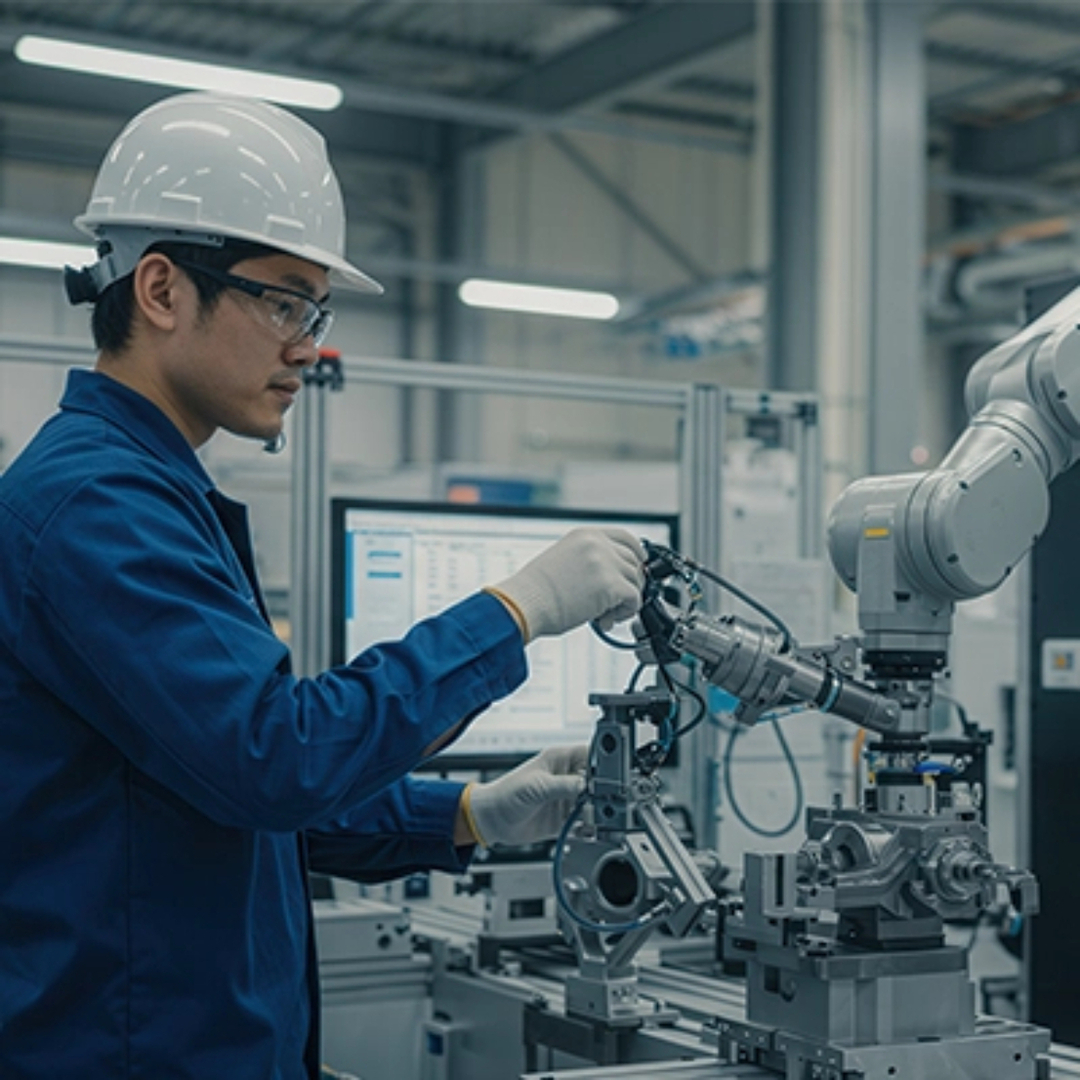
APAC: A New Era of Industrial Leadership
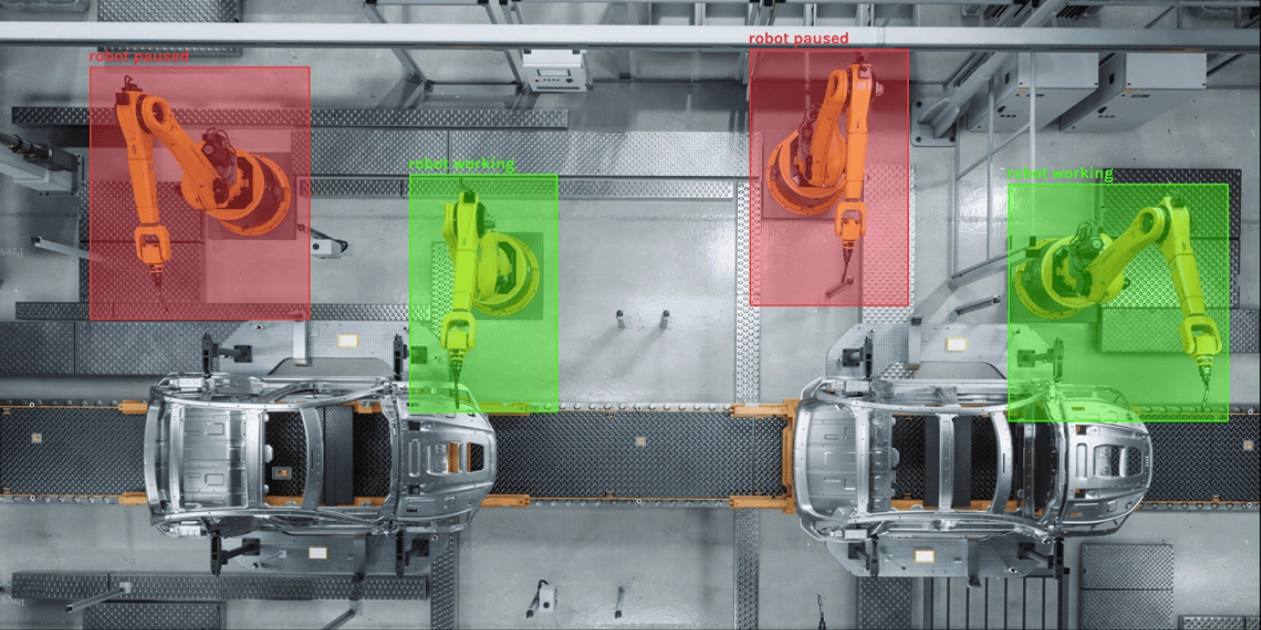
The Asia Pacific region sits at the heart of global manufacturing, accounting for a significant share of the world’s industrial output and hosting some of its most complex supply chains. Yet the region’s manufacturing story is no longer defined purely by scale, cost efficiency, or labor availability. Across Asia Pacific, manufacturers are embracing advanced manufacturing technologies to move toward a new industrial paradigm—one aligned with the principles of Industry 5.0, where human-centricity, sustainability, and resilience stand alongside productivity and automation.Advanced manufacturing in Asia Pacific reflects a convergence of digital technologies, intelligent automation, and strong industrial policy. Countries such as China, Japan, South Korea, Taiwan, Singapore, and Australia are investing heavily in artificial intelligence, robotics, computer vision, digital twins, and advanced materials. These technologies are not only improving operational performance but also reshaping how factories are designed, how work is performed, and how value is created across industrial ecosystems.At the core of this transformation is a shift in how technology is used. Where Industry 4.0 emphasized connectivity and automation, Industry 5.0 reframes technology as an enabler of collaboration between humans and machines. In Asia Pacific, this is evident in the growing adoption of AI systems that support human decision-making rather than replace it. Computer vision systems guide workers during complex assembly tasks, flag potential quality issues in real time, and reduce reliance on repetitive manual inspection. Collaborative robots increasingly work alongside operators, taking on physically demanding or repetitive tasks while leaving judgment, creativity, and problem-solving to people.Semiconductor manufacturing offers one of the clearest examples of advanced manufacturing at work in the region. In Taiwan, TSMC operates some of the most sophisticated production facilities in the world, where even microscopic defects can have enormous cost implications. To manage this complexity, the company has integrated machine learning and computer vision into inspection and process control, analyzing massive volumes of image data to identify subtle defect patterns and process drift. This approach not only improves yield and reliability but also demonstrates how AI can augment human expertise in environments where complexity exceeds what manual methods can handle.A similar logic underpins South Korea’s approach to advanced manufacturing. Samsung’s investments in large-scale AI infrastructure for manufacturing reflect a broader trend: factories are becoming compute-intensive environments. As production systems grow more complex, optimization increasingly depends on simulation, real-time analytics, and AI-driven decision support. By building centralized AI platforms that can be reused across products and facilities, manufacturers are turning advanced manufacturing into a scalable capability rather than a collection of isolated pilots.Across the region, digital twins have emerged as a powerful tool for managing complexity and uncertainty. In Japan, Toyota has applied digital replicas of factories and production lines to test layouts, validate equipment configurations, and transfer operational knowledge across plants. These virtual environments reduce the risk associated with physical changes, shorten ramp-up times, and support continuous improvement while also contributing to energy efficiency and emissions reduction. In Taiwan and across Southeast Asia, Foxconn has taken a similar approach at network scale, using digital twins to design and optimize smart factories that can be replicated across its global manufacturing footprint.These technologies are particularly important in a region characterized by dense, interconnected supply chains. Advanced manufacturing systems enable greater transparency and adaptability, helping firms respond to disruptions ranging from geopolitical shifts to demand volatility. AI-driven forecasting, edge computing, and real-time monitoring allow manufacturers to anticipate problems and adapt operations quickly, strengthening industrial resilience—a core pillar of Industry 5.0.Sustainability is increasingly inseparable from advanced manufacturing in Asia Pacific. Governments and enterprises alike recognize that long-term competitiveness depends on reducing environmental impact while maintaining growth. Digital technologies play a central role in this effort. Computer vision reduces scrap by catching defects earlier. Predictive maintenance extends equipment life and minimizes waste. Digital twins help optimize energy use and material flows before physical resources are committed. Rather than treating sustainability as a regulatory burden, many manufacturers are using advanced manufacturing to embed environmental performance directly into production design.Singapore provides an example of how advanced manufacturing can be scaled beyond individual factories. Through initiatives such as the Smart Industry Readiness Index, the country has focused on building a shared framework for digital transformation, enabling manufacturers to benchmark maturity, prioritize investments, and move from experimentation to enterprise-wide adoption. This ecosystem-level approach reflects a broader trend in Asia Pacific, where collaboration between government, industry, and research institutions accelerates technology diffusion.Not all advanced manufacturing in the region is about volume or scale. In Australia, for example, advanced manufacturing is often concentrated in high-value, specialized domains such as defense, energy, and medical devices. Here, additive manufacturing, advanced materials, and digital twins support rapid prototyping, localized production, and shorter qualification cycles. These capabilities are especially important for building resilient supply chains and reducing dependence on distant manufacturing hubs.Looking ahead, the trajectory of advanced manufacturing in Asia Pacific aligns closely with the goals of Industry 5.0. Technologies will continue to evolve, but their purpose is becoming clearer: to empower people, strengthen resilience, and support sustainable growth. As AI, computer vision, robotics, and digital platforms mature, manufacturers in the region are likely to focus less on isolated efficiency gains and more on integrated systems that combine human intelligence with machine precision.In this sense, Asia Pacific is not only adopting advanced manufacturing—it is actively shaping what the next industrial era looks like. By grounding technological progress in human-centric design, environmental responsibility, and adaptability, the region is laying the foundation for an industrial future that is both competitive and sustainable.
Jan 14, 2026