
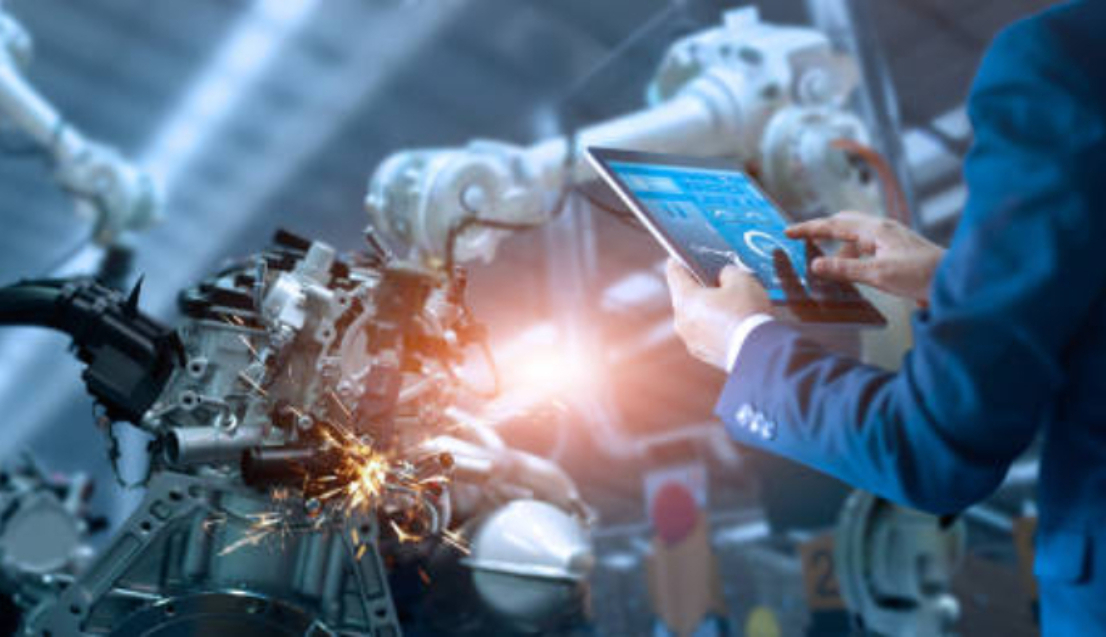
The landscape of advanced manufacturing is undergoing a profound transformation, shaped by the convergence of digital technologies, shifting geopolitics, sustainability imperatives, and changing workforce dynamics. What was once defined primarily by automation and scale is now being redefined by intelligence, adaptability, and resilience.
At the heart of this change is the transition from linear, asset-heavy production models to data-driven, cyber-physical systems. Manufacturing is no longer just about converting raw materials into finished goods; it is about orchestrating complex networks of machines, software, suppliers, and customers in real time. Sensors, industrial IoT, and edge computing have turned factories into living systems that continuously generate data. When combined with AI and advanced analytics, this data enables predictive maintenance, adaptive quality control, and real-time optimization of production flows. The factory floor is increasingly becoming a decision-making environment, not just an execution layer.
Artificial intelligence is playing a particularly catalytic role. Beyond traditional robotics, AI is now embedded in design, planning, and operations. Generative design tools can explore thousands of product configurations based on cost, performance, and sustainability constraints, dramatically shortening development cycles. Machine learning models can anticipate supply disruptions, optimize energy consumption, and dynamically balance trade-offs between speed, cost, and quality. This shift is moving manufacturing from reactive efficiency to proactive intelligence.
Another defining feature of the new manufacturing landscape is the reconfiguration of global supply chains. Years of optimization for cost and scale have given way to a renewed emphasis on resilience and strategic autonomy. Geopolitical tensions, trade restrictions, and pandemic-era disruptions have exposed the fragility of overly concentrated production networks. As a result, manufacturers are investing in regionalization, nearshoring, and multi-sourcing strategies. Advanced manufacturing technologies—such as flexible automation, additive manufacturing, and digital twins—make it economically viable to produce closer to end markets while maintaining competitiveness.
Sustainability is no longer a peripheral concern; it is becoming a core design principle. Regulatory pressure, investor expectations, and customer demand are pushing manufacturers to rethink how products are made, used, and recycled. Advanced manufacturing enables more precise control over materials, energy, and waste. Digital traceability systems can track carbon footprints across the entire product lifecycle, while new production methods allow for light-weighting, modularity, and circular design. In this context, manufacturing excellence is increasingly measured not only by output and margin, but also by environmental and social impact.
The workforce dimension is also evolving in fundamental ways. As factories become more digital and automated, the nature of manufacturing work is shifting from manual repetition to supervision, problem-solving, and system integration. Demand is rising for hybrid talent—engineers and operators who understand both physical processes and digital systems. This is forcing companies to invest in reskilling, human–machine collaboration, and new organizational models that blur the boundaries between IT, engineering, and operations. The competitive advantage of manufacturers is becoming as much about learning speed as production capacity.
At a strategic level, advanced manufacturing is increasingly intertwined with national competitiveness and industrial policy. Governments around the world are supporting investments in semiconductors, advanced materials, robotics, and clean manufacturing technologies. These efforts reflect a broader recognition that manufacturing capability underpins innovation ecosystems, economic resilience, and technological sovereignty. For companies, this means navigating a more complex environment where public policy, technology roadmaps, and capital allocation are tightly linked.
Taken together, these forces point to a future where advanced manufacturing is not defined by any single technology, but by the ability to integrate many technologies into a coherent operating model. Success will depend on how well organizations can align digital infrastructure, physical assets, talent, and strategy. The manufacturers that thrive will be those that treat transformation not as a one-time upgrade, but as a continuous process—one that balances efficiency with resilience, innovation with sustainability, and automation with human creativity.
In this new landscape, manufacturing is no longer the “back end” of the economy. It is becoming a central platform for innovation, value creation, and long-term competitiveness.